An amp that's stopped working, or started doing something it didn't used to, puts you in an awkward spot. It's heavy, it's valuable, and the number of people who actually understand what's inside it has been shrinking for years. So "where do I get this fixed" is a fair question, and the honest answer is: it depends what's wrong, and it depends who's local to you.
Here's how to work both of those out.
First, is it actually broken?
Before you box anything up, rule out the cheap stuff. A surprising number of "dead" amps are a failed valve, a blown fuse, a dirty input jack, or a guitar lead that's gone open-circuit. None of those need a workshop. Swap the lead, try a different socket, look at the fuse. If you've got a spare set of valves and you know which is which, a tired output valve is the single most common cause of a sudden change in sound.
If it powers up but sounds wrong (hum that wasn't there before, a loss of headroom, a top end that's gone harsh or muddy), that's usually ageing components rather than an outright failure, and it's worth a look but not an emergency. If it bangs, flashes, smells, or trips the mains, stop using it. That one goes to a bench.
What kind of repairer do you actually need?
This is the part most guides skip, and it's the part that matters.
A valve amp is not the same animal as a solid-state combo or a modelling amp. It runs lethal voltages inside the chassis that remain present after it's switched off and unplugged, and working on one safely needs specific knowledge and habits. Plenty of competent electronics techs won't touch them, and plenty of general "musical instrument" shops will send them away. So the first filter is: does this person work on valve amplifiers specifically, as a normal part of what they do, not as a favour, not as a maybe.

The second filter is whether they fix at component level or by swapping parts. Component-level means finding the actual fault (the leaky coupling cap, the drifted resistor, the cracked solder joint) and putting it right. Board-swapping means replacing whole assemblies until the problem goes away, which is faster for the repairer and more expensive for you, and on a vintage amp often isn't possible at all because the parts don't exist any more. For anything old or worth keeping, you want the former.
Questions to ask before you hand it over
You don't need to be an engineer to tell a careful repairer from a careless one. A few questions do most of the work:
Do you do the safety checks first? Earth continuity and insulation resistance before anything else, every time. If that's not the answer, that tells you something.
Will I get a quote before any work starts? You should never be surprised by the bill. A proper repairer assesses the fault, tells you what it'll cost, and waits for your say-so.
What happens if you can't fix it? A no-fix-no-fee arrangement on diagnosis is a reasonable thing to expect and a sign of someone confident in their work.
Do I get anything in writing? A note of what was found and what was done isn't bureaucracy: it's the difference between a repair you understand and a black box. It also matters the next time the amp needs attention.
If the answers are vague, that's data. If they're specific, you've probably found the right person.
The "near me" question
Geography matters more than people expect. A valve amp is heavy and fragile, and posting one across the country, while it's done all the time, adds cost, risk and waiting. If there's someone capable within a sensible drive, that's usually the better answer: you can drop it off, talk through the fault in person, and collect it without trusting a courier with something irreplaceable.
The catch is that "capable and local" is a narrower set than it used to be. The high-street music shop that used to have someone in the back who'd fix anything is mostly gone. What's replaced it, in a lot of areas, is one or two independent specialists working out of a workshop rather than a shop front, which is harder to stumble across but usually a better repair when you find it.
Where we come into it
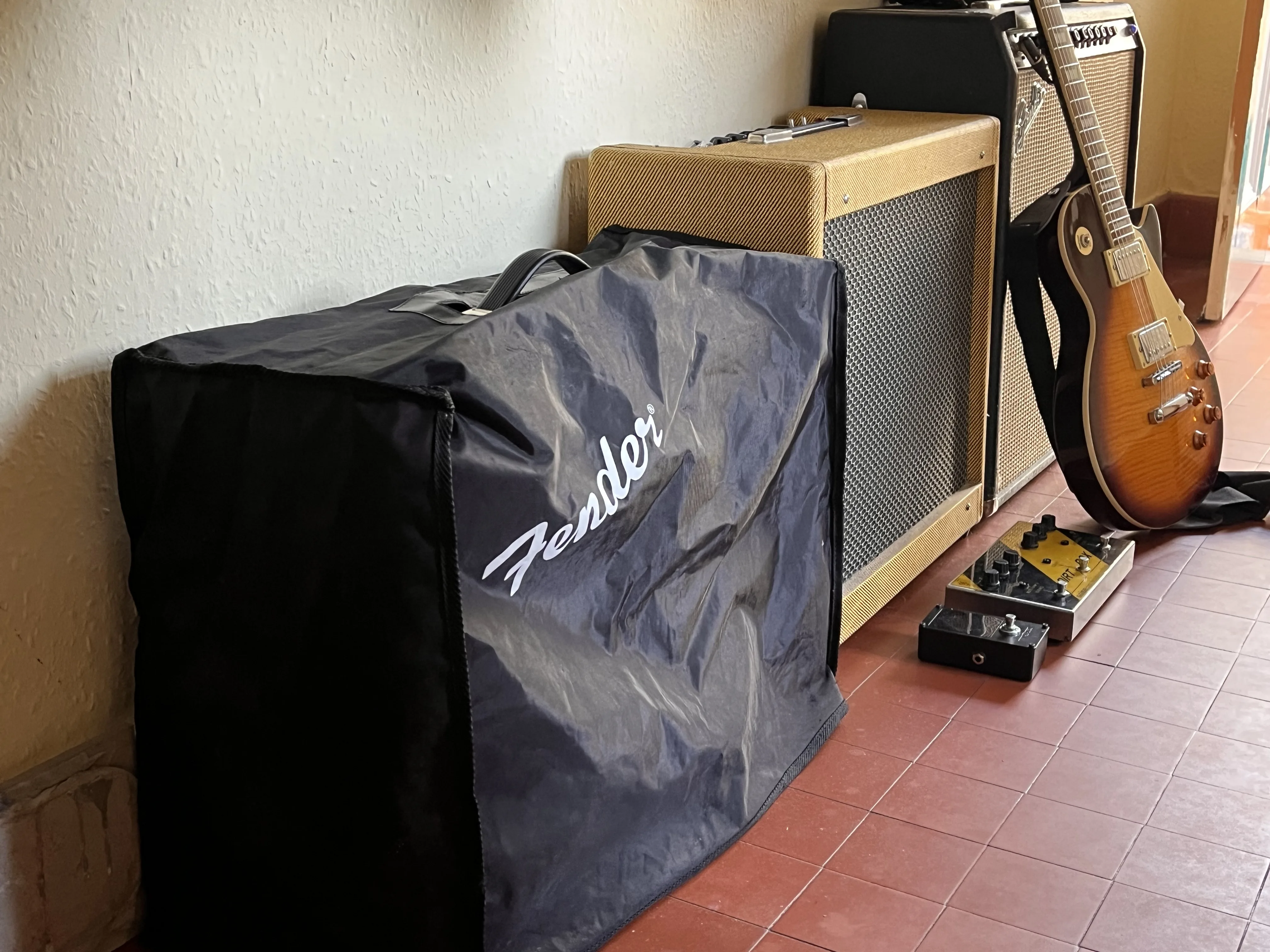
This is DriftTone's guide, so it would be coy not to say it: this is what we do. Component-level valve amp repair, from a one-bench workshop in Congleton, covering the Cheshire area: Macclesfield, Crewe, Knutsford, Stoke and the surrounding towns. Safety checks first, a quote before any work, no fix no fee on diagnosis, and a written summary of what was found and done. Guitar and bass valve amps of any make or age.
We're not the only option, and for some jobs we won't be the closest one. But if you're in this corner of Cheshire and you've got a valve amp that needs someone who'll actually find the fault rather than guess at it, that's the bench you're looking for.
If you want to talk it through, tell us what you've got and what it's doing: we'll come back to you quickly.
Most of what's on this site is the work itself: real jobs, opened up and written down, over on From the Bench. If you want to see how we actually approach a fault before you trust us with yours, that's the place to start.