What came in
A Lexicon MPX 550 dual-channel effects processor, one of the better mid-range studio reverb and delay units of the late nineties. Built in 1999, still capable of producing useful sounds, and still appearing on racks because the algorithms hold up.
It came in because the PROGRAM encoder, the large rotary knob used to scroll through presets and edit values, had become unreliable. Sometimes it wouldn't register a turn at all. Sometimes it would step in the wrong direction entirely. Turn it clockwise and the preset number goes down.
If you've ever used gear with a faulty encoder you'll know how maddening this is. It's not just inconvenient: it makes the unit difficult to trust, because you can never be sure the value on screen is the one you actually selected.

What we found
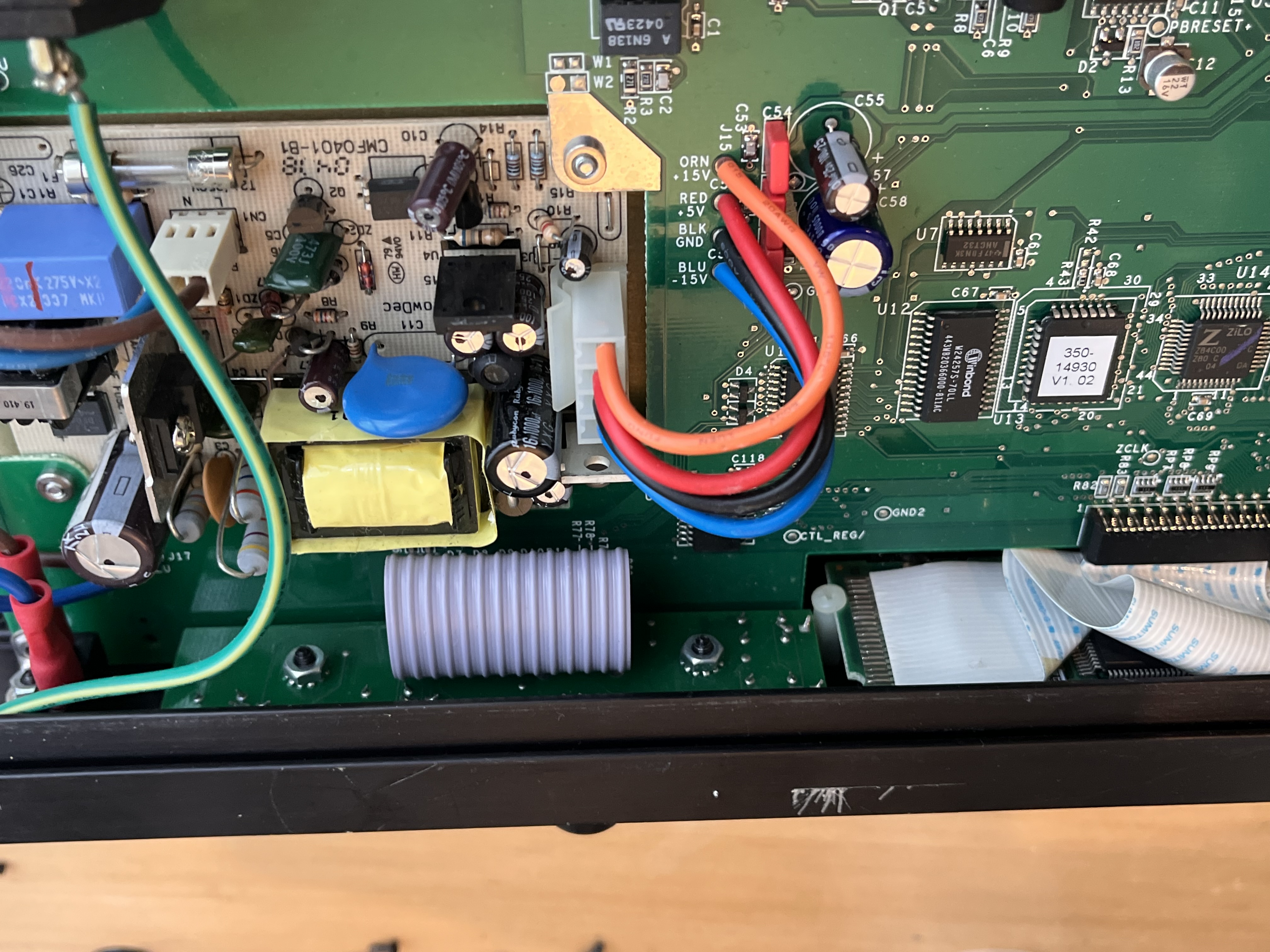
The MPX 550 is a well-specified unit for its era. Inside you've got a Lexicon LexiChip 3B, their proprietary 100-pin DSP handling all the effects and reverb processing, alongside AKM analogue-to-digital and digital-to-analogue converters, and a tidy switchmode power supply. It's not especially repairable in the sense of having many user-serviceable parts, but the control hardware is conventional enough.
The PROGRAM encoder sits on a small daughterboard along with four pushbuttons and a cluster of indicator LEDs, all connecting to the main board via a ribbon cable. It's a 24-position incremental rotary, the kind that generates two pulse trains slightly out of phase with each other. The processor reads which pulse leads to determine direction, and counts edges to determine how far you've turned.
When contacts are dirty or solder joints have aged, you get exactly the symptoms reported: missed counts and direction reversals, because one channel drops out relative to the other.
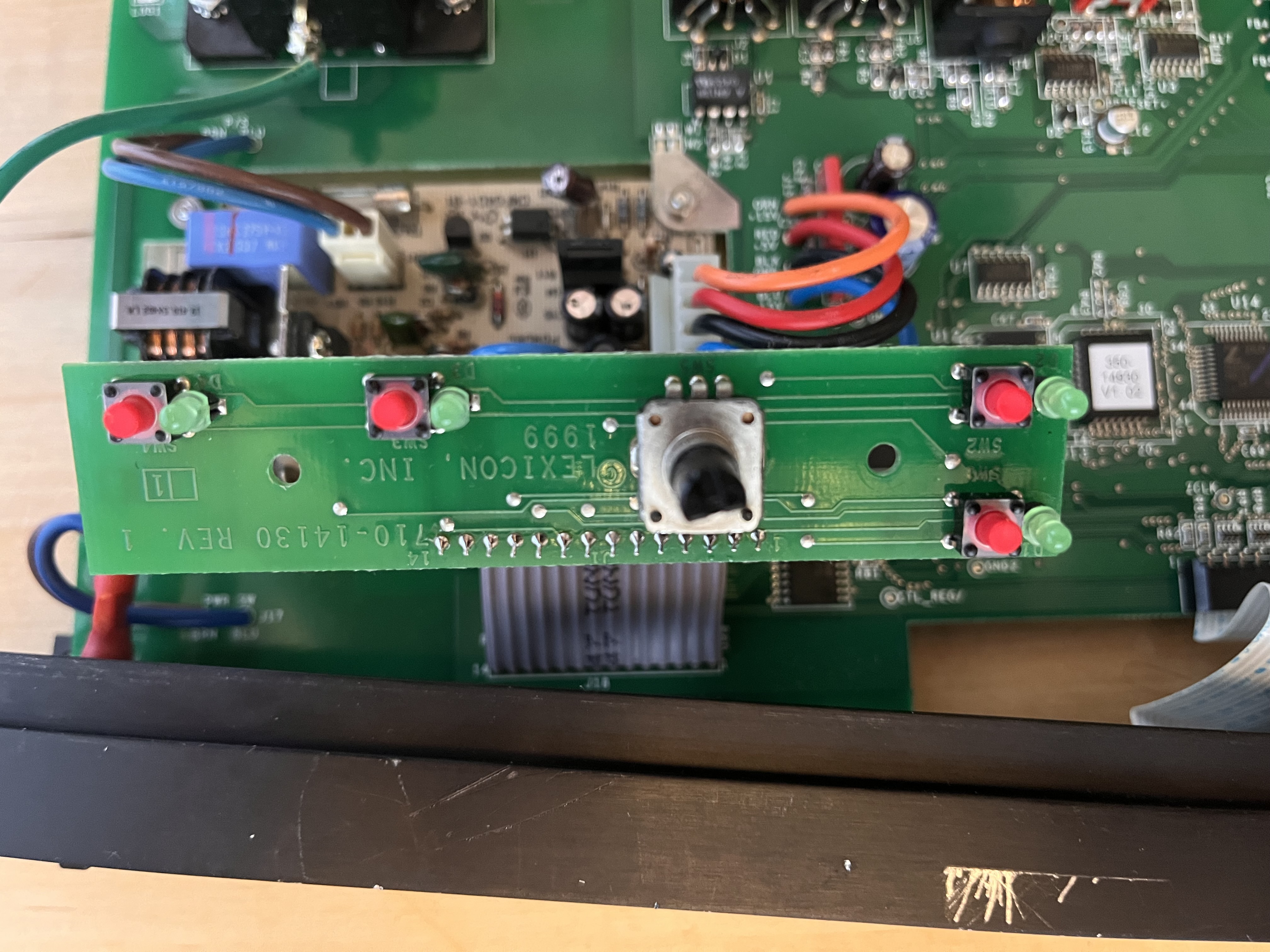
That's the theory. The question is always whether it's the contacts, the solder joints, or the encoder body itself that's at fault.
What was done
With the unit fully stripped down and the switch board accessible, the first step was to reflow the solder joints on the encoder's six PCB pins. On a unit of this age the joints can develop hairline cracks: enough to pass current most of the time, but not reliably under the mechanical stress of being turned.
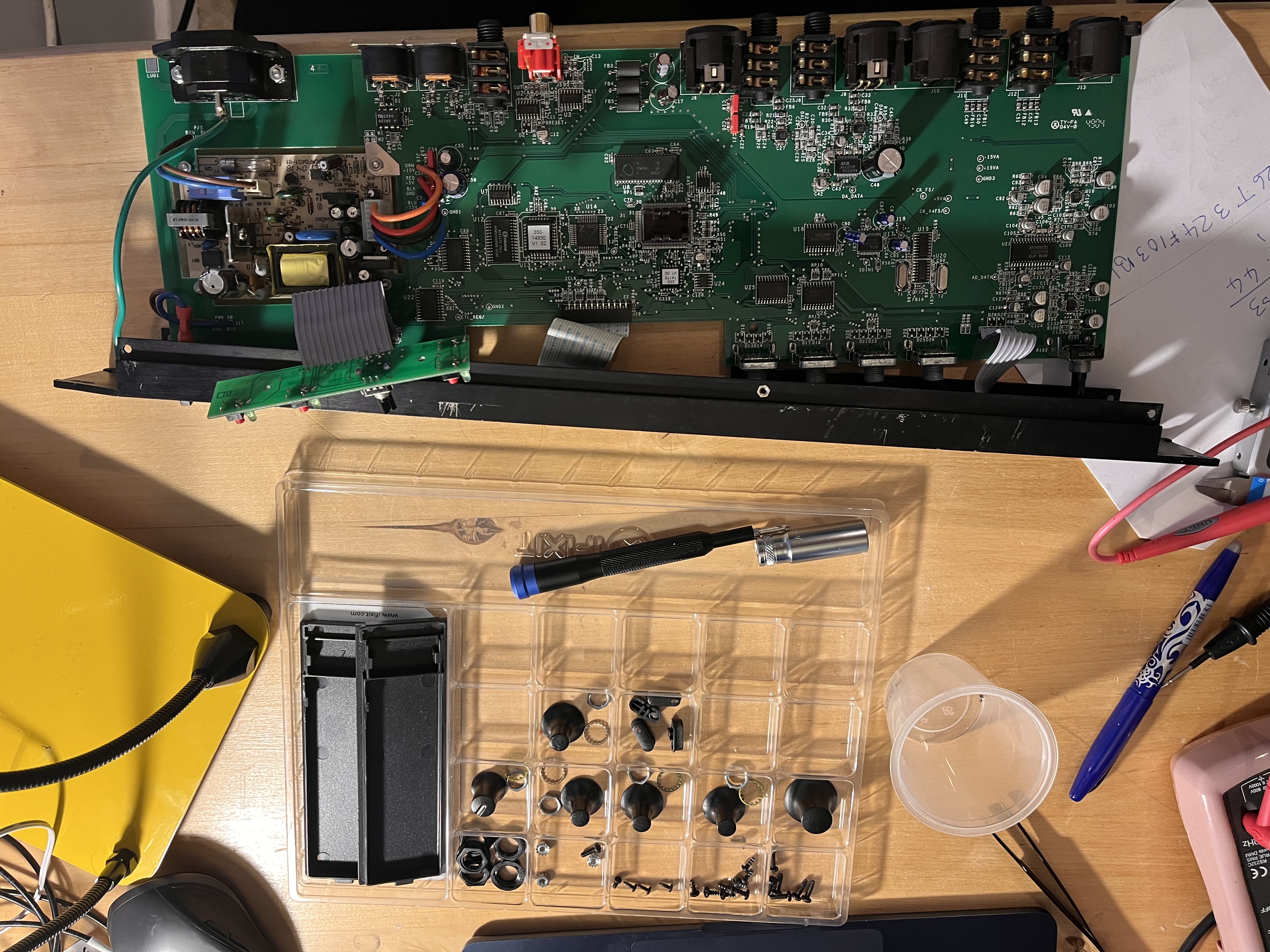
After the reflow, contact cleaner through the shaft gap, worked through with plenty of full rotations in both directions to distribute it across the internal contacts.
Re-tested. No missed steps. No direction reversal. Clean registration in both directions, every time.
The encoder didn't need replacing. No parts were used.
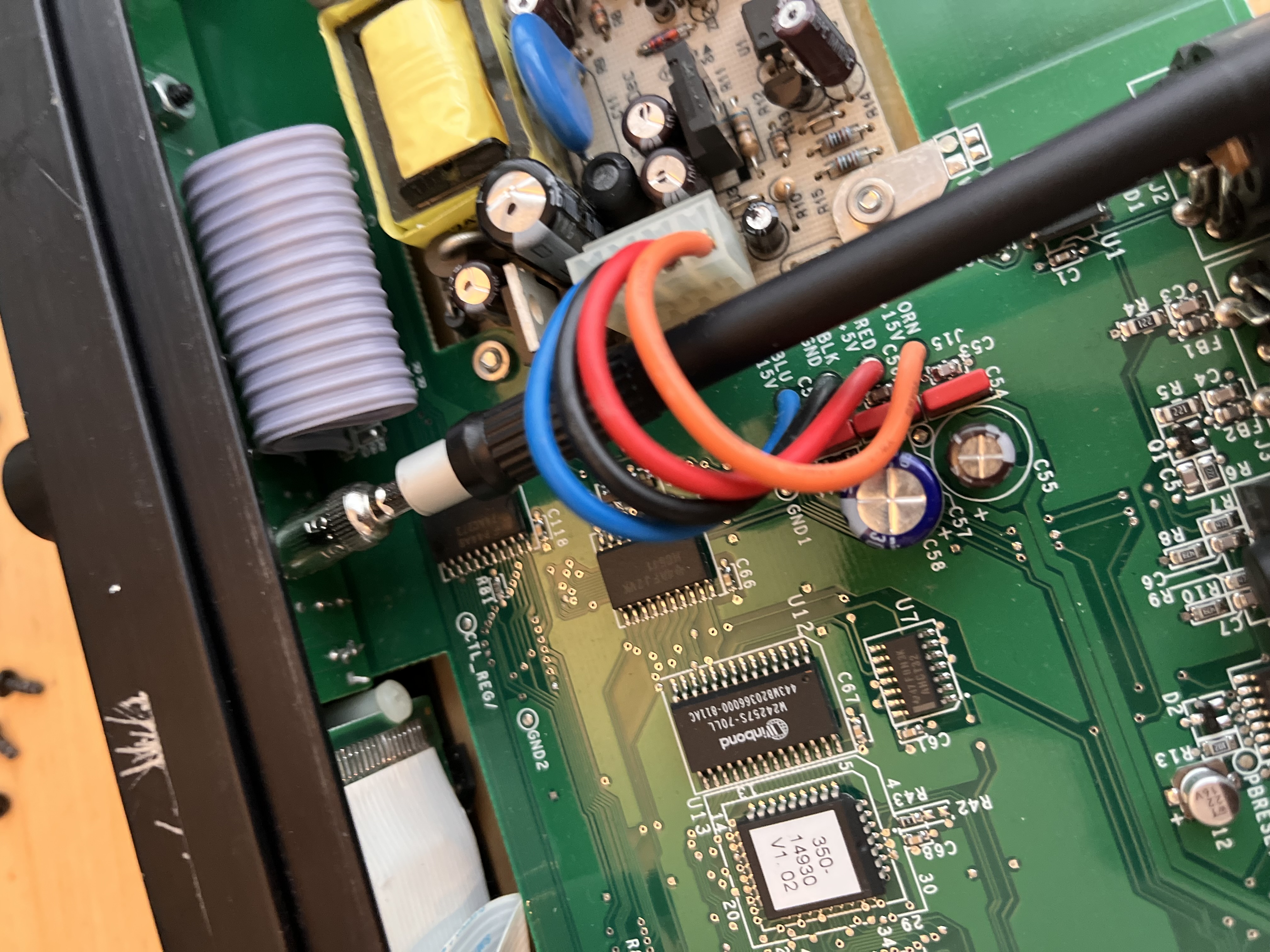
While the unit was open, the display contrast was adjusted via the firmware setting. The screen had been reported as badly faded, and while there's nothing to be done about genuine LCD degradation, the contrast hadn't been optimised. Post-adjustment it's readable from a sensible angle in normal room light, a significant improvement on how it arrived.
How it left
Fully reassembled, safety checks passed, all controls and effects tested across both channels.
The MPX 550 isn't fashionable kit. It doesn't have the cult status of the PCM70 or the MPX1, and it predates the current vintage rack revival by a comfortable margin. But it does what it does well, the reverb algorithms are musical, and a working example in good condition is worth keeping alive.
This one is.
Encoder faults on studio gear are usually contact or joint issues: worth trying a reflow and clean before committing to a replacement part.