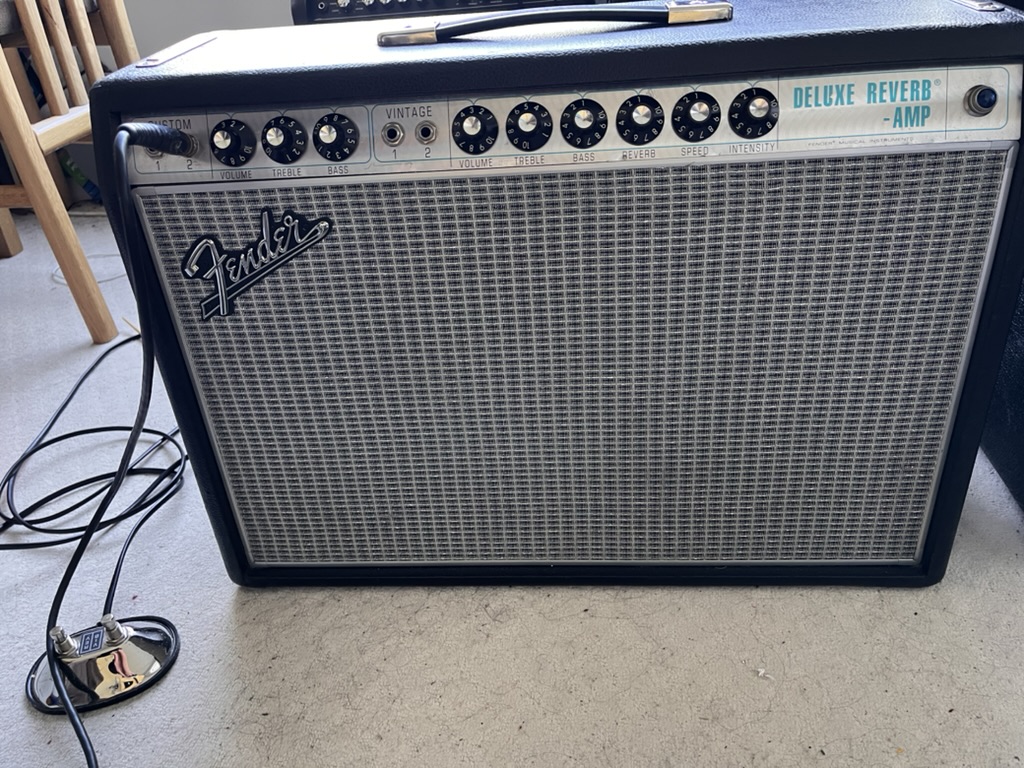
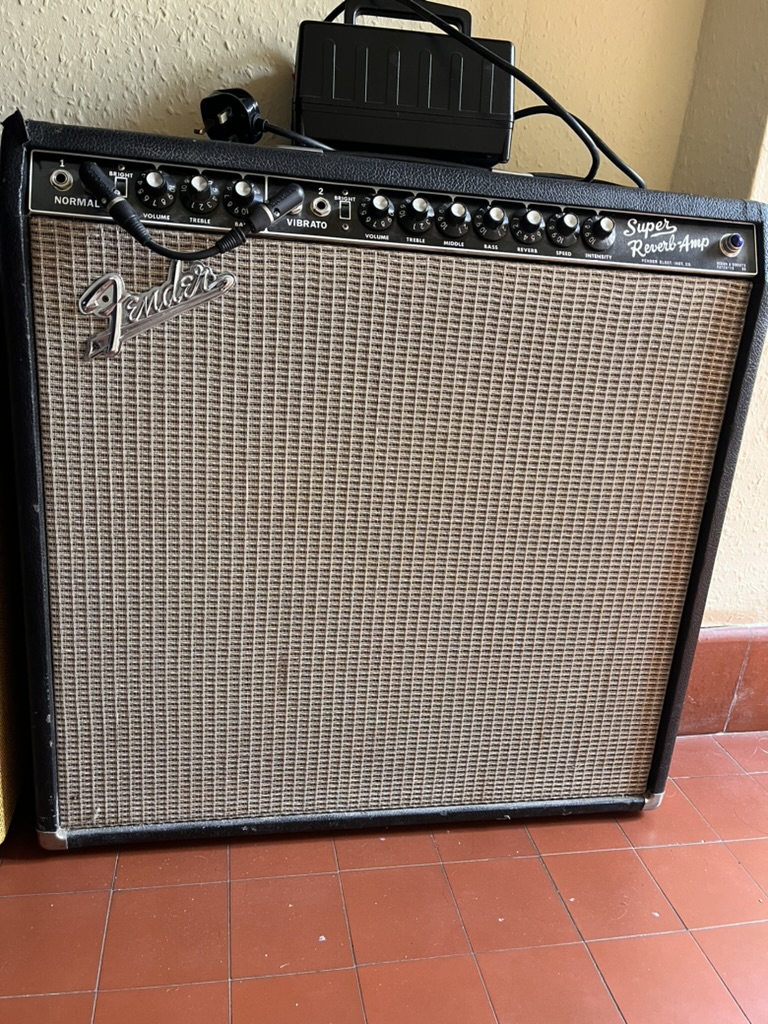
Having a modern reissue and an original blackface-era amp on the bench in the same stretch is a useful thing, because it turns "reissues aren't as good as the originals" from a received wisdom into something you can actually test against the metal. Some of it holds up. Some of it doesn't.
Where the reissue wins
Consistency is the real, unglamorous advantage. A modern build uses tighter-tolerance components throughout, and it shows on the bench; readings across a pair of tubes, or a pair of resistors that are meant to match, tend to sit closer together than you'll find on an old original board, simply because the parts were specified tighter to begin with. That's not romantic, but it's real, and it means less chasing small imbalances that were baked in from day one rather than caused by decades of ageing.
Consistency of build quality matters too. A modern reissue coming apart tends to look the same on the inside as the last one, and the one before that. An original from this era has usually had forty-plus years to accumulate whatever the last few owners and techs decided to do to it; some of it sympathetic, some of it not. What you find inside an original is as much a record of its history as it is of its original spec.
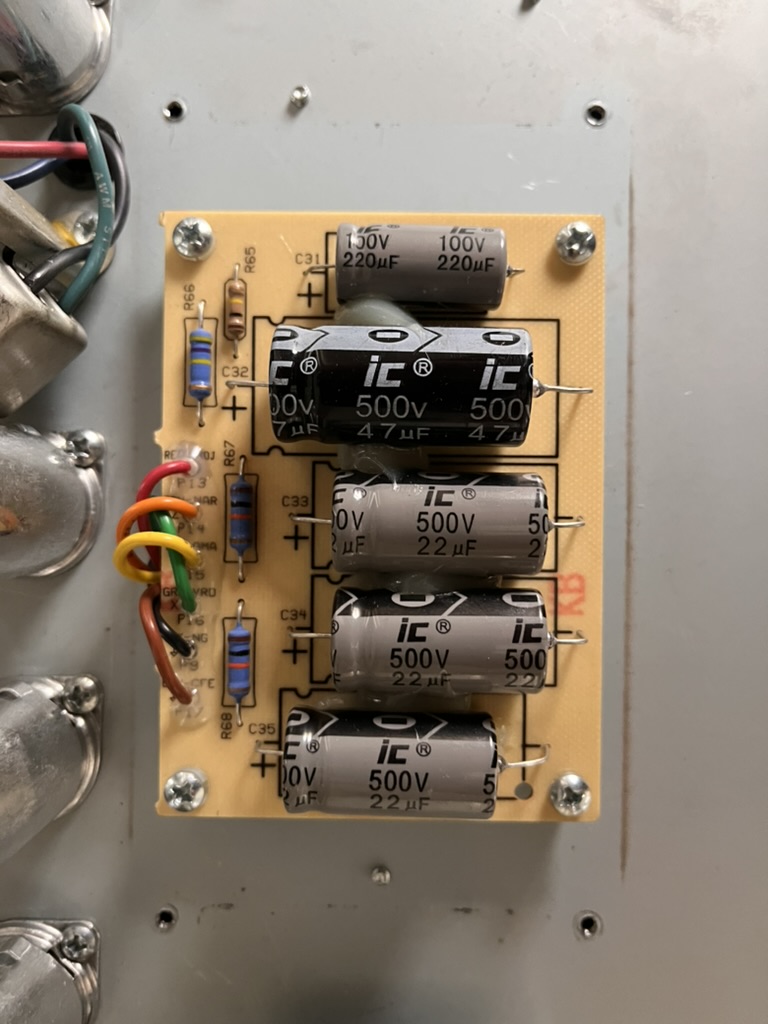
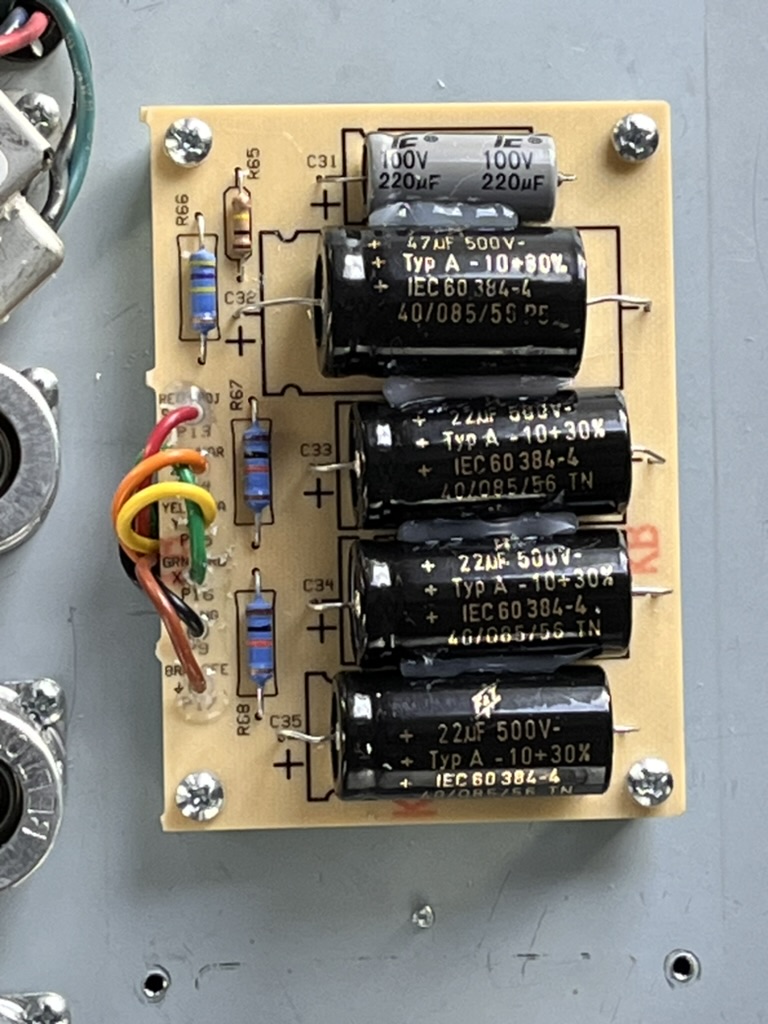
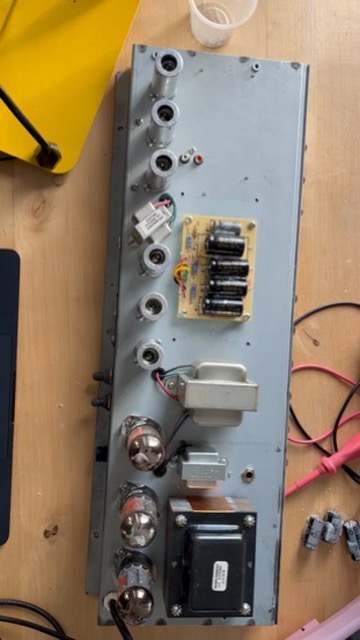
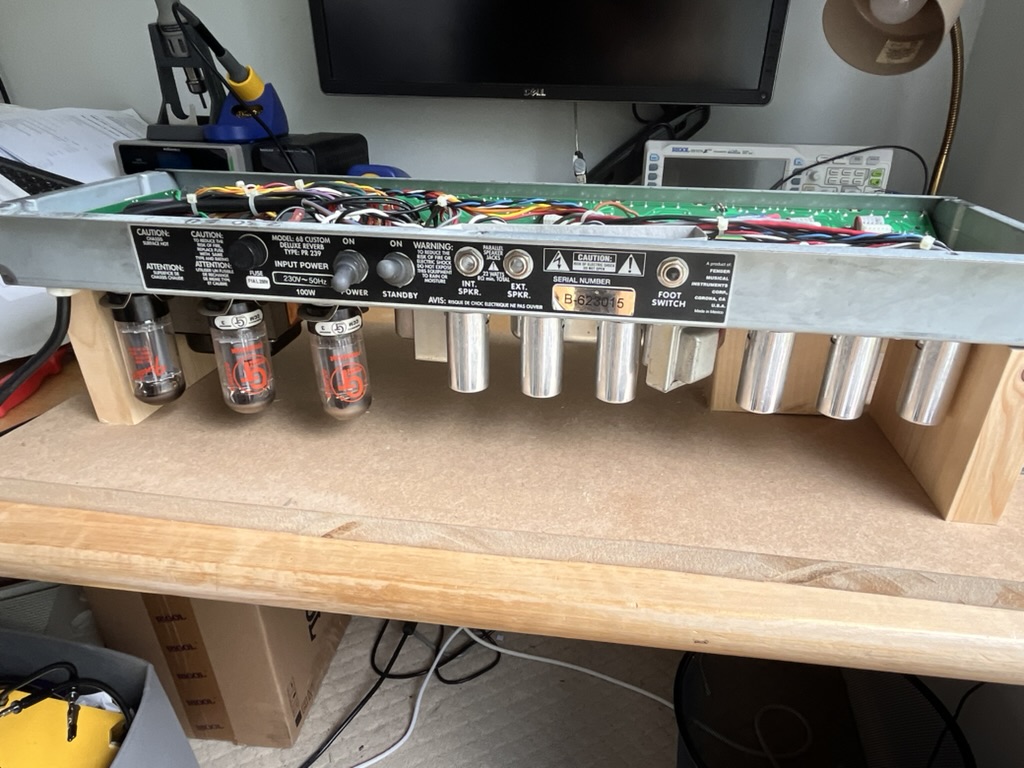
A cap swap on this exact reissue makes the tolerance point concrete rather than theoretical. The old caps were "IC" branded stock parts at 220µF/100V, 47µF/500V and 22µF/500V. The replacements are rated -10+30% to IEC 60384-4. I don't have a printed tolerance figure for the old caps to compare against, so I won't guess at the improvement, but the new caps carry a documented, tighter spec on the tin.
Where the original still has something the reissue doesn't
The components themselves are a different story. The general engineering, the circuit, the transformer sizing, the layout, set the standard the reissue is still following. But specific original parts, the very things most likely to need replacing on an old amp, were built to a lower tolerance than what you'd choose today, and forty-plus years is a long time for a carbon composition resistor or a molded capacitor to hold its original value. None of that is really "they don't make them like they used to" in the way that phrase usually gets used; it's closer to "they didn't need to make them like that yet, because nobody expected this component to still be in service half a century later."
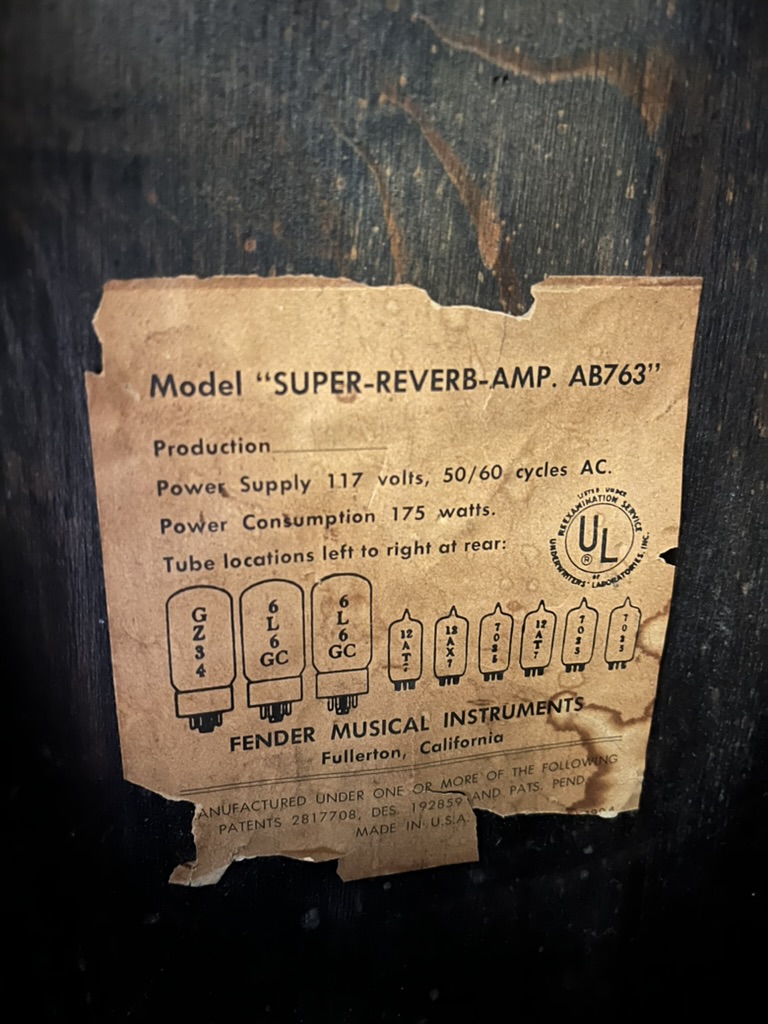
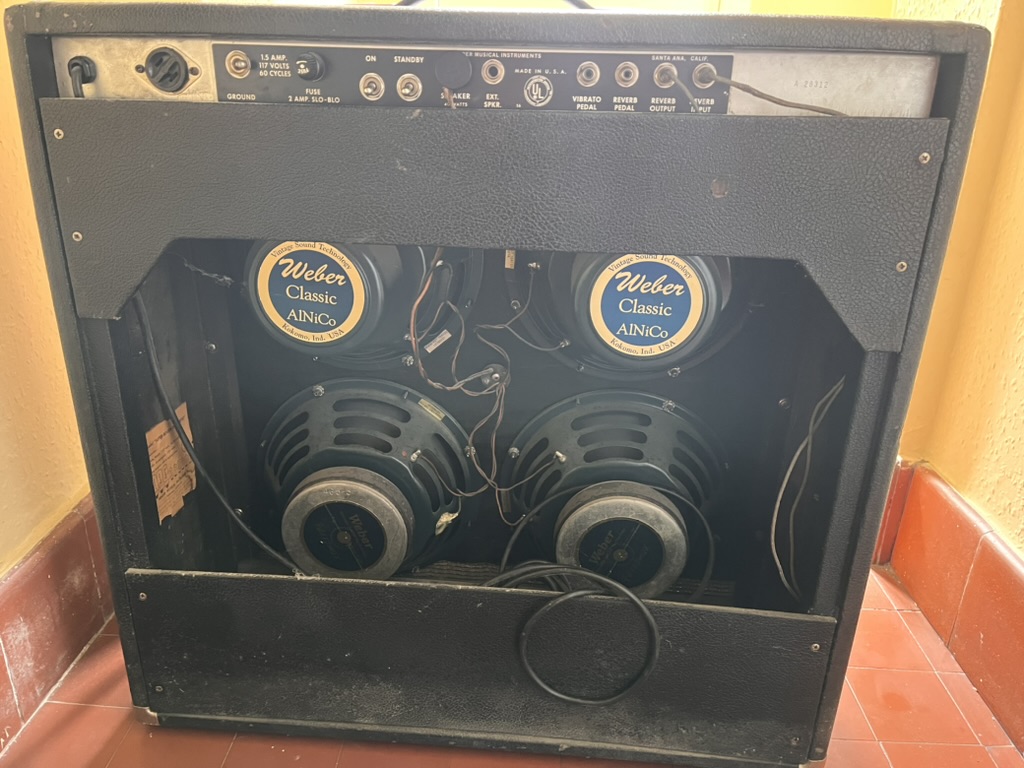
The vintage Super Reverb on the bench makes the point without needing to argue it. The tube chart confirms the amp as a genuine "SUPER-REVERB-AMP. AB763," rated 117V, 175W, running a GZ34 rectifier and 2x6L6GC output tubes.
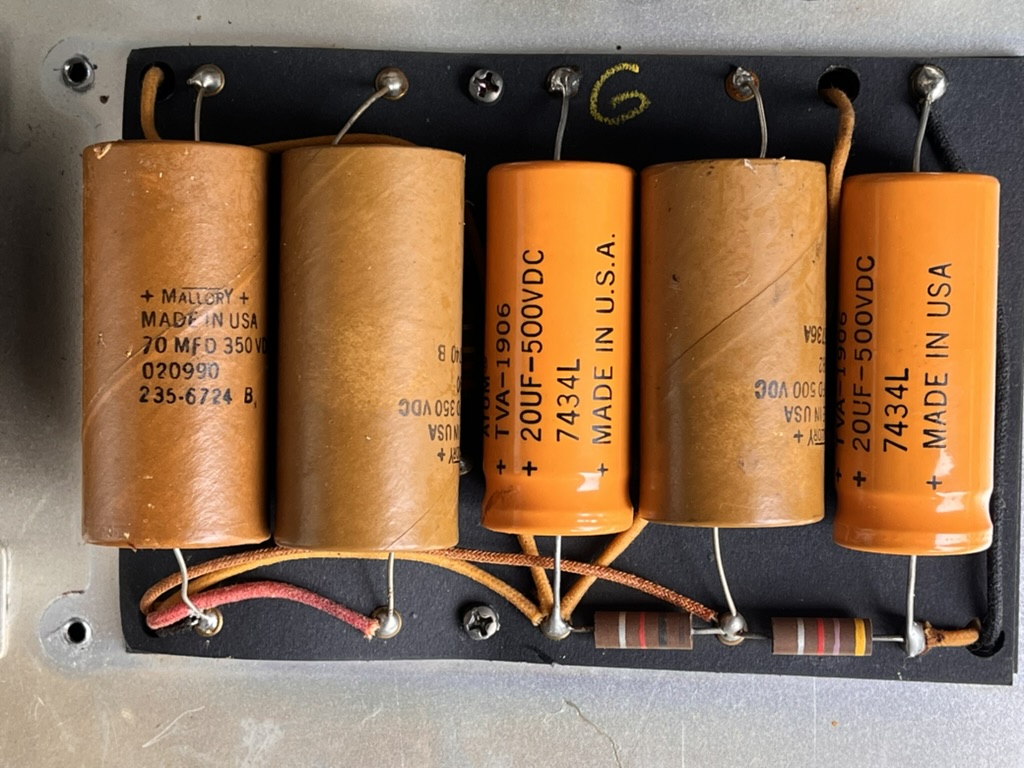
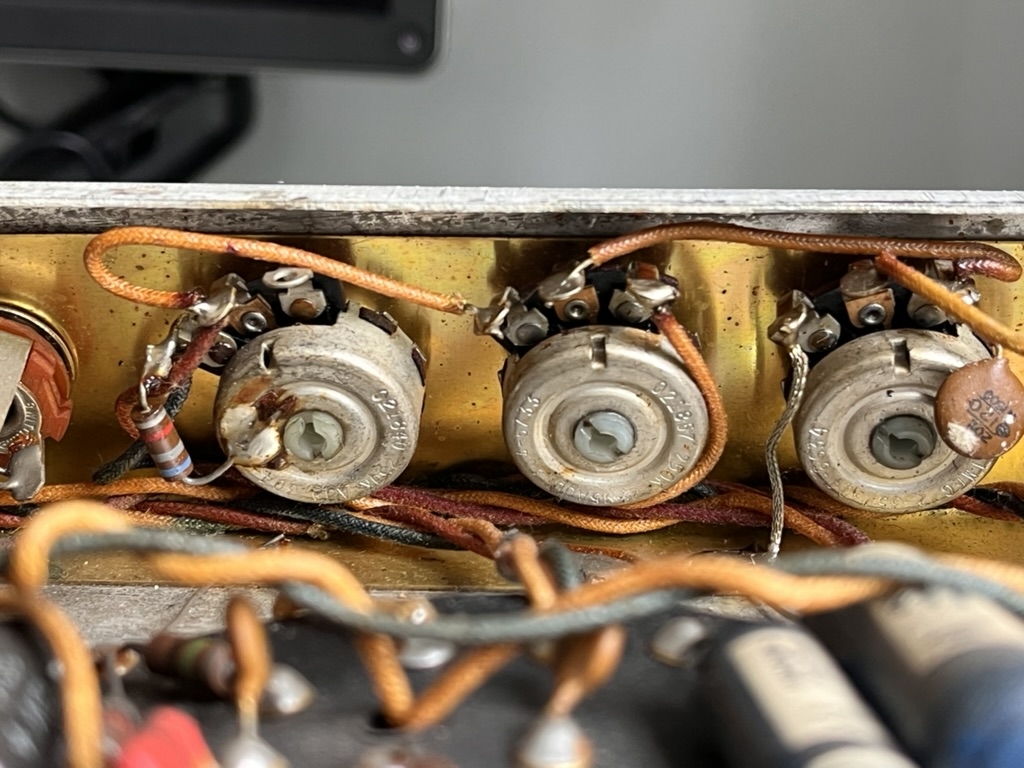
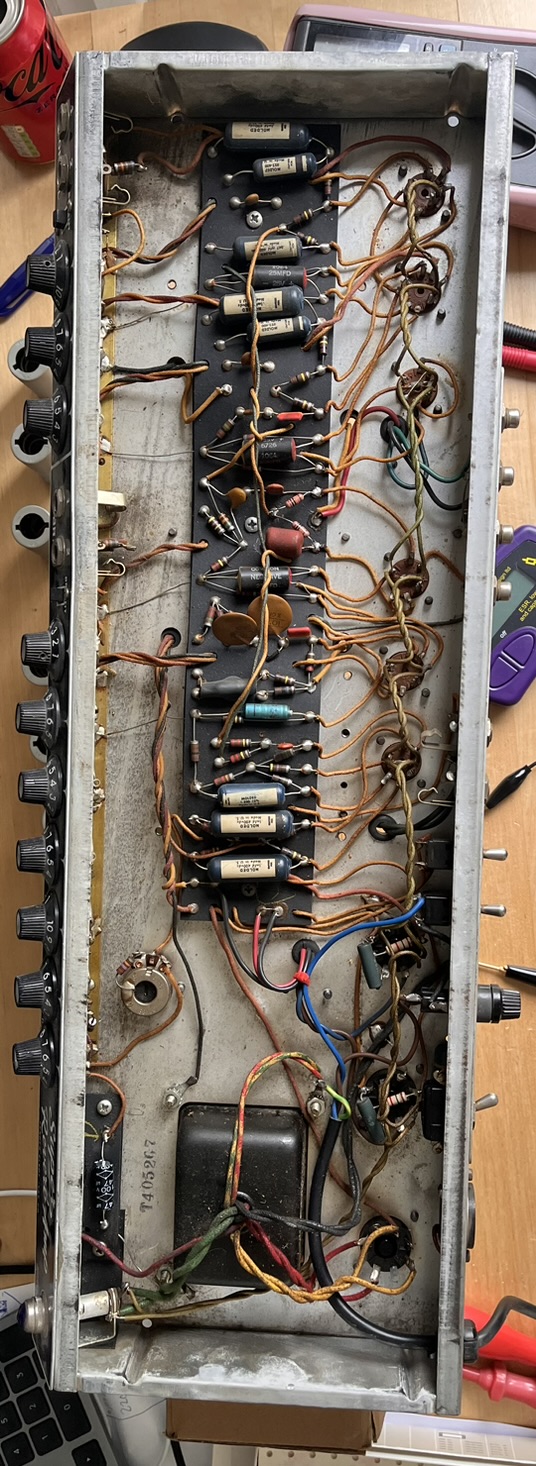
The filter cap board carries two Mallory 70 MFD 350V caps wired in series (giving 700V combined) alongside three ATOM 20uF 500V caps, all flagged for replacement on age grounds rather than any measured failure. Two of the volume pots on this same amp were found noisy, again an age-related fault rather than a design flaw.
The speakers tell a different kind of story. The two AlNiCo units visible in the open cabinet are Weber Classics, and they aren't original to the amp; a prior owner or tech fitted them at some point in this amp's life. That's the "record of its history" point made literal: an original carries the marks of every hand that's worked on it, for better or worse.
Two more practical points tend to get missed when the comparison stays purely electronic. First, serviceability: the classic eyelet or turret board on an original is generally easier to work on and modify than a modern PCB layout, which matters a lot once an amp is fifty years old and something inevitably needs attention. A board you can trace and re-solder by eye is a different proposition from a densely populated PCB.
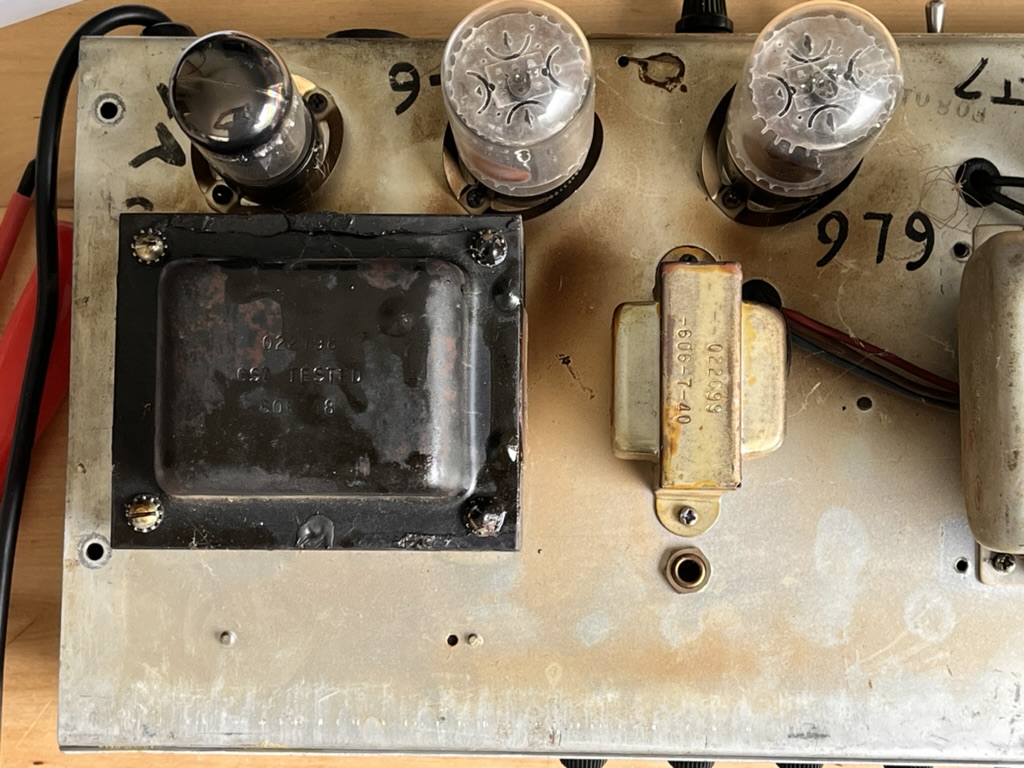
The transformer itself is worth a look too; it's the one major component where the reissue's engineering is directly following the original's lead rather than departing from it.
Second, the cabinet and hardware tell their own story. Pre-CBS and early blackface-era cabinets were finger-jointed pine shells with a floating plywood baffle; by the early '80s that had shifted to pressboard with a glued-in baffle. That's a build-quality change that has nothing to do with tubes or capacitors, and it's one of the better arguments for why an old cabinet in good condition is worth something in itself.
One reissue quirk
Not a full section, but it's a small thing that stands on its own: the reverb drive circuit on European-market reissues is more complicated than it needs to be, for reasons that have nothing to do with tone. The original design used a single, simple optocoupler in the drive path. European and UK reissues replace that with a small daughter board carrying a lot more components, driven by RoHS rules banning cadmium in consumer electronics; the old-style optocoupler used a cadmium sulfide photocell, so it fell foul of that.
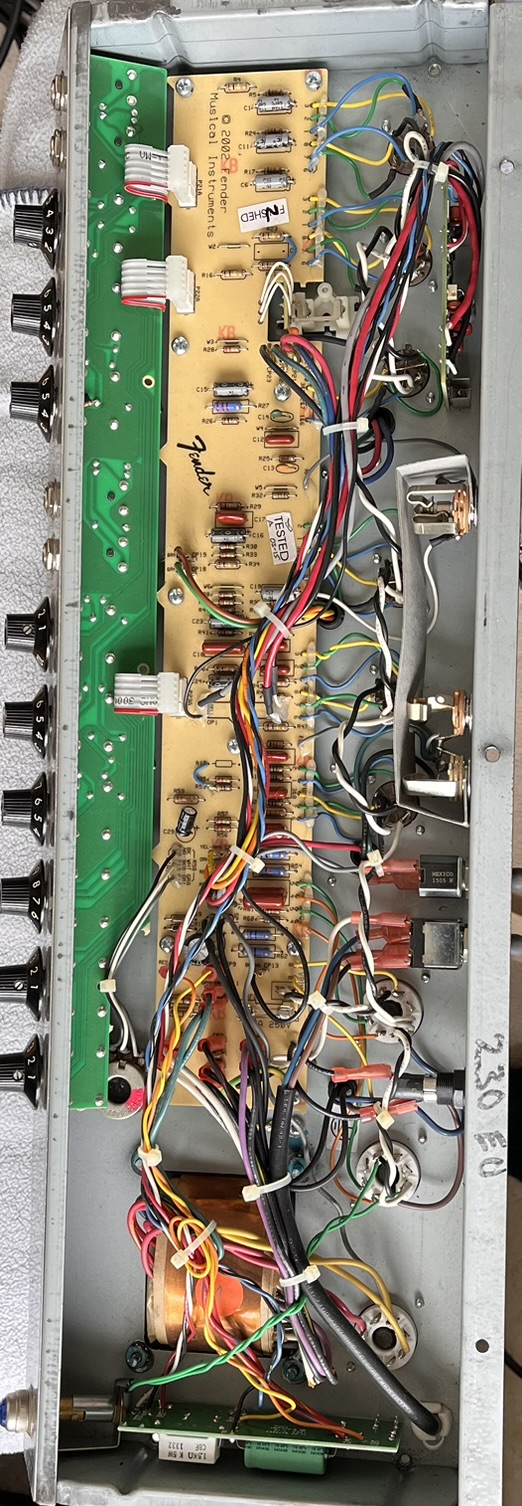
The intent is easy to support; nobody wants cadmium finding its way into the water supply. But it's hard to believe no cadmium-free optocoupler could have done the same job without the extra daughter board and everything that comes with it. In the end it works, and there's no way to A/B the actual sonic difference on the bench.
Where that leaves things
To be clear: tone is highly subjective, and there's no shortage of YouTube shootouts comparing capacitor brands and vintages in the same amp, so I won't try to relitigate that here. My own view, for what it's worth, is that the differences are marginal and subtle. On a good pair of speakers, listening to an isolated guitar line, you can hear something. On a stage with a full band, or anywhere inside a busy mix, the reality is that those differences become close to undetectable.
Neither of these amps is simply better than the other, and that's the actual finding, not a diplomatic dodge. A well-serviced original, with its ageing weak points actually found and addressed rather than assumed fine because it's old and "vintage," will sound and behave the way the design always intended, and it stays easier to keep alive over the next fifty years than it was to build. A reissue straight from the factory starts closer to that same design intent and needs less chasing to get there, but it isn't magic, and it isn't immune to the same categories of fault, just a newer version of them, on a board that's less forgiving to work on when they show up.
What both amps prove, sitting side by side, is that the circuit was right the whole time. The differences are almost entirely in the parts and the build, not the design, which says something worth sitting with: the thing that made these amps good was never the components ageing gracefully. It was a design good enough that decades of drifting parts still couldn't fully spoil it.