What it is
Not everything that ends up on the bench is broken. Sometimes you build something because you're tired of making a mistake that hasn't happened yet, but will.
At DriftTone, a lot of the work involves plugging unknown gear in to check it's working. An amp that came in with a fault. A pedal that may or may not be doing what it should. Something someone's built, or modified, or had a go at before bringing it here. Most of the time that's fine. But you only have to connect the wrong thing to a decent amplifier once to turn a routine test into an expensive afternoon. I'd been using my main guitar amp as a bench monitor. That needed to stop.
The solution was a disposable amplifier. Something that could take a hit, cost almost nothing to replace, and still do the job.
What went into it
The heart of the build is a Bitsbox LM386 audio amplifier kit, a small PCB based on the classic LM386 chip, a component that's been turning up in low-power audio projects since the 1970s. The design itself is a descendant of the Ruby amplifier from Run Off Groove, a well-regarded low-power amp circuit that's been a favourite of DIY builders for years. The kit costs around £4. It's designed to run on 9V, handles line-level input, and drives a small speaker directly. Gain is adjustable: a jumper on the board sets it to either 20 or 200 times, and you can drop a resistor in there instead if you want something in between.
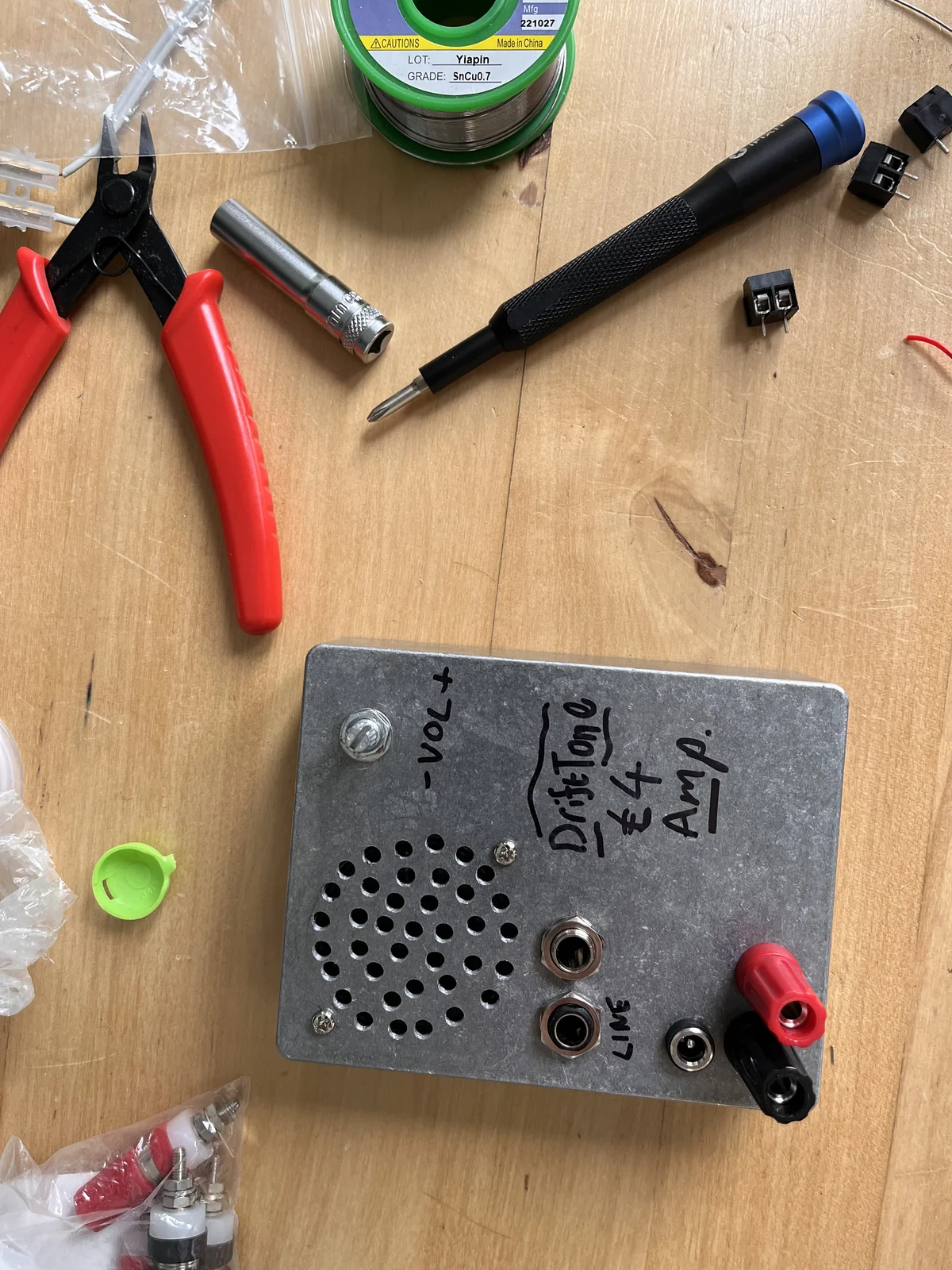
The board went into a scrap diecast aluminium enclosure from the parts bin. An 8 ohm, 0.5W speaker, the kind that turns up in old clock radios and cheap intercoms, was sourced and fitted. Everything else was leftover stock: a volume pot, a quarter-inch jack for the input, banana plugs for the power supply connection, a line-level output jack for routing to other test equipment.
The biggest job was physical: drilling out the speaker aperture and cutting holes for the hardware. Cosmetics were not the priority. The enclosure has "DriftTone £4 Amp." written on it in marker pen. That felt right.


What's next
The current version accepts line-level signal only. A future revision will add a small JFET preamp stage (also from Bitsbox, also a few pounds), which will bring instrument-level signals up to a usable level. At that point it becomes a proper bench amp, able to test guitar pickups, pedal outputs, and amplifier stages directly without any additional equipment in the chain.
Why it matters
There's a version of this story where someone plugs a faulty unit into a vintage amp, something misbehaves on the output, and the repair bill doubles. The £4 amp exists so that story doesn't happen here.
If the worst occurs (a DC fault on the output of something under test, a wiring mistake, a component that fails in an interesting way), the collateral damage is a four-pound kit and an afternoon. That's a trade worth making.
It also just makes the bench more practical. Quick signal checks, listening tests during a repair, confirming a stage is working before reassembly, all of it now happens through something that doesn't matter. The main amp stays off the bench.
What was spent
- Bitsbox LM386 kit: £4
- 8 ohm speaker: £1.50
- Enclosure, pot, jacks, hardware: scrap / leftover stock
Sometimes the most useful thing on the bench isn't a piece of test equipment. It's a thing you don't mind breaking.